

I bet your AI is moving faster than your security team can type “multi-factor authentication.”
The latest findings say that most companies lack the maturity to defend against modern AI-driven threats. Only 10% have made it to the Reinvention-Ready Zone — the cybersecurity high ground where innovation doesn’t just survive, but thrives.
That means the other 90%...?
They’re playing defense in the Exposed Zone — vulnerable, underprepared, and unknowingly rolling out the welcome mat for cyber attackers.
But guess what? The ones in the Reinvention-Ready Zone are 69% less likely to be hit by advanced attacks, 1.6x more likely to squeeze higher ROI from AI, and 1.7x better at reducing technical debt.
Translation: they’re not just safer, but they’re also making more money while they’re at it.
The Place Where You Want to Land: The Reinvention-Ready Zone
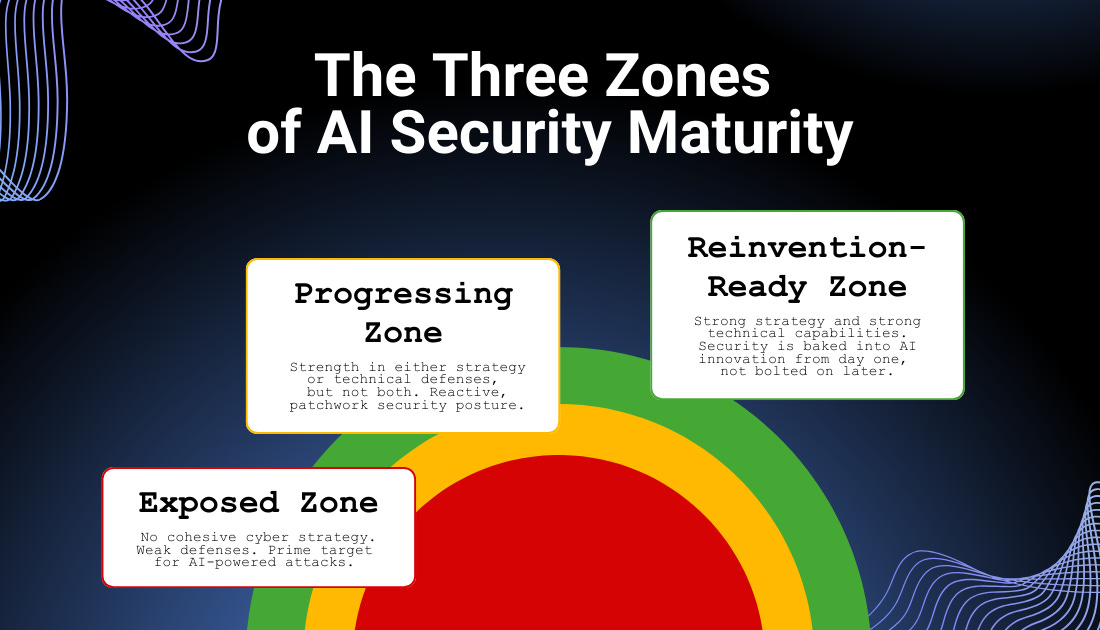
So what's a Reinvention-Ready Zone?
Picture two companies.
One is sprinting ahead with AI — launching new products, delighting customers, making headlines. The other is running just as fast… straight toward a cliff.
Why the difference?
Security. That first company is in the Reinvention-Ready Zone. A small portion of companies make it here, and they all share two things:
Rock-solid cybersecurity capabilities: Zero Trust, secure cloud foundations, proactive threat detection, AI-specific safeguards.
Integrated cyber strategy: Security baked into every transformation initiative, board-level accountability, and a culture that treats security as a business driver, not an afterthought.
Companies in this zone don’t retrofit security later. Oh no, they design it into their AI systems from day one. That’s why they have fewer breaches, less technical debt, and stronger customer trust.
How to Join the Reinvention-Ready 10%
If your organization is still in the Exposed Zone, here’s the playbook to make the switch faster. I call it The 4A Framework.
1. Align: Make AI Security a C-Suite Priority
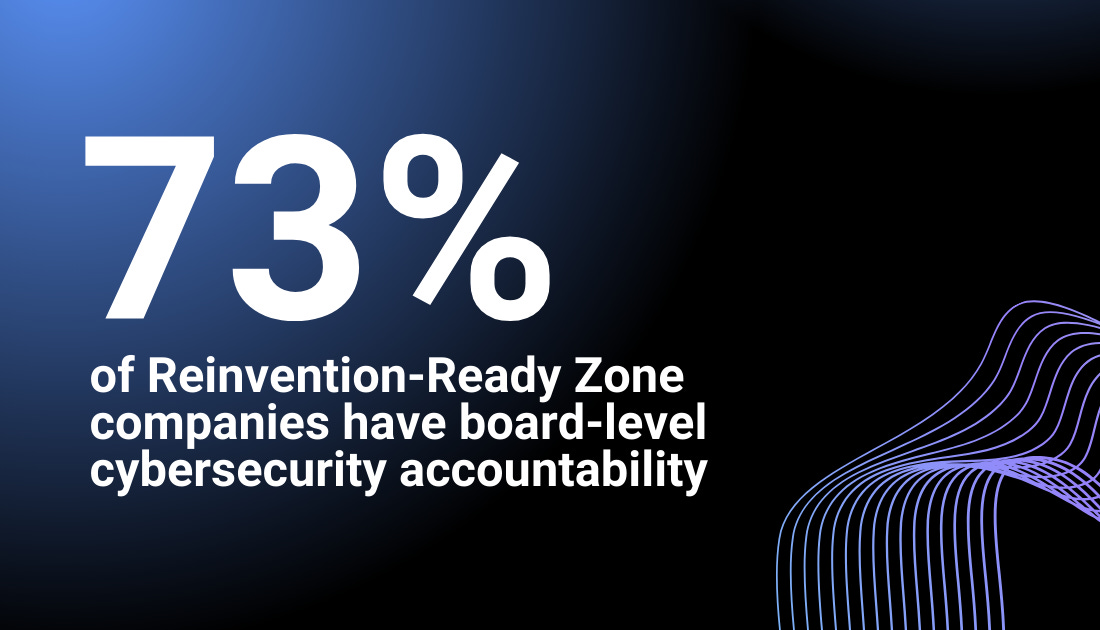
Assign board-level accountability for AI security.
Integrate security into every business decision, from product launches to acquisitions.
Establish shared KPIs that measure security by design, not just post-breach cleanups.
2. Architect: Build Secure-by-Design AI and Cloud Systems
Embed security into AI development from the start. No retrofits.
Implement Zero Trust across data, identity, and applications.
Use Infrastructure-as-Code to prevent misconfigurations and reduce human error.
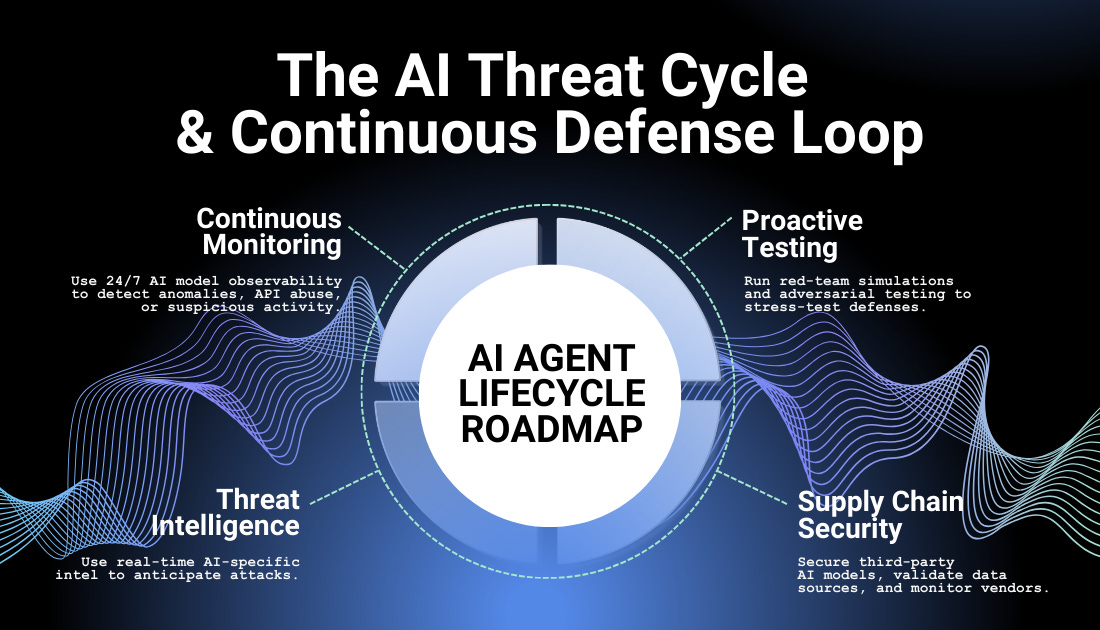
3. Armor: Maintain Resilient AI Systems with Continuous Monitoring
Deploy AI-specific threat detection to catch adversarial attacks, model poisoning, and prompt injection.
Run regular red-team simulations to test your defenses.
Lock down your AI supply chain with strict vendor security standards.
4. Automate: Let AI Defend AI
Let generative AI handle repetitive SOC tasks like log analysis and threat triage.
Leverage AI-driven risk scoring to prioritize vulnerabilities.
Use AI-powered identity governance to adapt access controls in real time.
A Thing to Consider: The Payoff
Here’s the part most execs miss: security isn’t just about avoiding disaster.
Make the moves I listed above, and you’re not just safer — you’re faster, and you rule the market. You’ll innovate without the drag of technical debt, win customer trust faster, and deliver AI projects that actually pay off instead of becoming risk liabilities.
Or, keep ignoring it, and you’ll be the next headline.
Your choice.
If you’re serious about keeping your business in the 10% Club, it’s time to match the words with actions.
Sign up for our free AI Workshop. We’ll discuss AI security strategies, explore tailored proof-of-concepts for your industry, and map out your fastest route to the Reinvention-Ready Zone.